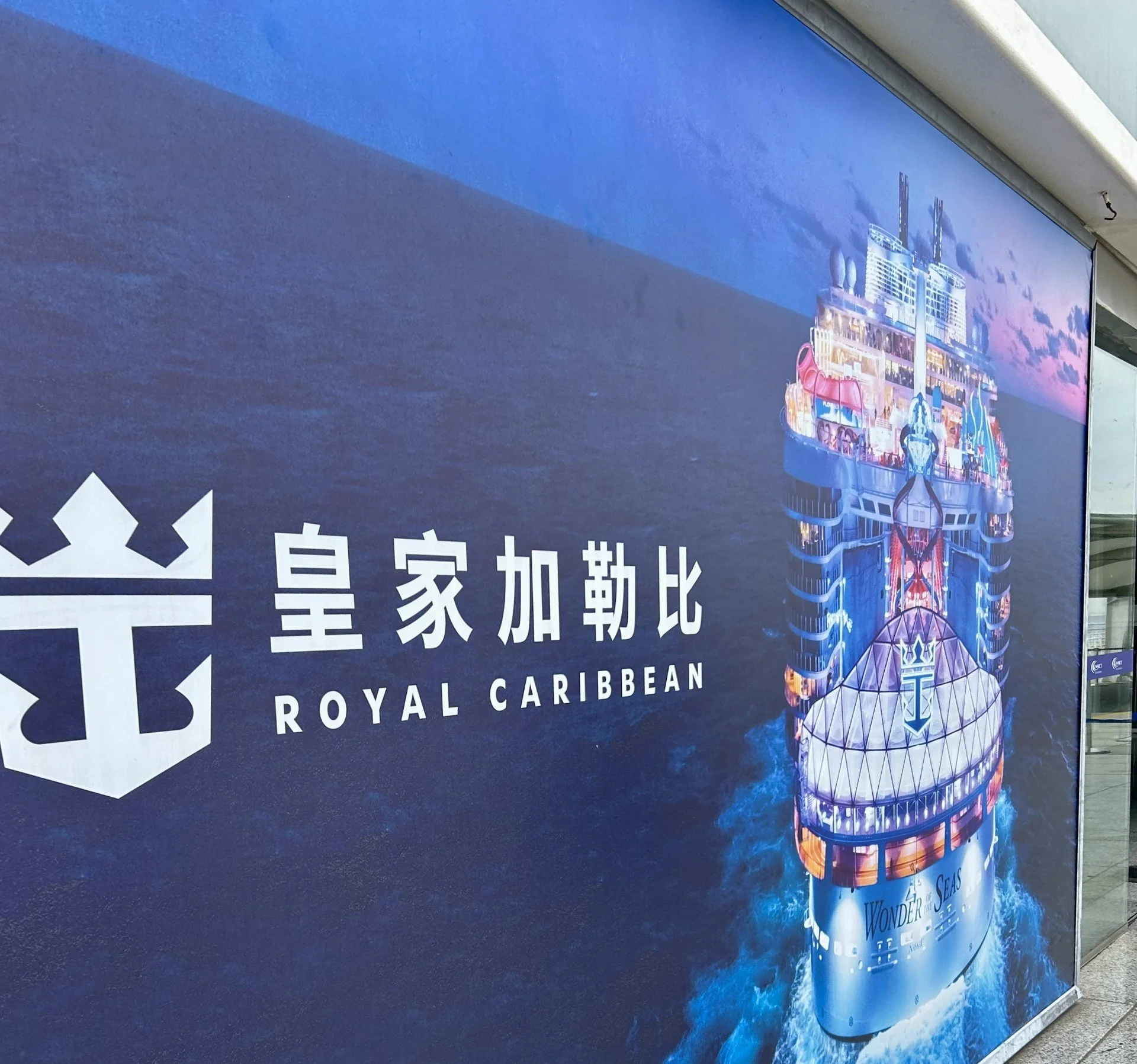
Is it Autism Friendly?
Cruise - Spectrum of the Seas, Royal Caribbean
Score: 5.5 out of 8 Read on to find out why
Our Approach
Our autism friendly reviews are not about rating enjoyment, luxury, or whether a visit was “fun.” Instead, they assess whether an environment is genuinely accessible and supportive for autistic people and families. Each review is grounded in a consistent set of criteria, including visible signs of welcome and safety, clear pre-planning information, disability or companion pricing, alternatives to waiting, intuitive and signposted wayfinding, clearly explained and well-signed processes, sensory accommodations, access to quiet or sensory spaces, and staff attitudes toward disability and difference. The aim is to provide practical, predictable information that supports informed decision-making, so autistic travellers can better understand what to expect and decide what will work for their individual needs.
Disclaimer: Autism is experienced differently by each individual, and access needs can vary widely. These reviews reflect observed features and available supports rather than a guarantee of suitability for every person. What works well for one autistic person or family may not work for another, so we encourage readers to use this information as a planning tool alongside their own knowledge of individual needs and preferences.
Correct as of: 18 January 2026
Introduction
Ship: Spectrum of the Seas, Royal Caribbean
Sailings: Two back-to-back cruises. 7 night Kobe, Osaka & Tokyo and 5 night Nagasaki and Fukuoka. Both departed from Shanghai, China in Sep 2025
As you will find out very quickly if you explore this site, I am a Royal Caribbean stan. I have been on eight cruises with Royal within the last decade, and typically find them to be really accommodating and autism-friendly. This cruise was no different within the scope of things that were within Royal’s control. But there were a few things that happened cruising out of Shanghai that means I cannot in good conscience ever recommend families like mine sail out of Shanghai unless there are significant changes to processes.
As with all of our autism-friendly reviews, the goal is not perfection, but to understand how thoughtfully the environment meets and has considered a range of needs of Autistic people.
Let’s break it down…
Signs of Safety and Welcome - Score 1 out of 1
When Autistic travellers or their parents/carers are deciding if an environment is going to be welcoming or not, we typically look for signs of safety such as an Accessibility tab on a website (with information about accessibility for people with hidden disabilities), or evidence they are signed up to the Sunflowers Hidden Disability program. These signs show that on organisation has considered and sought to accommodate our needs.
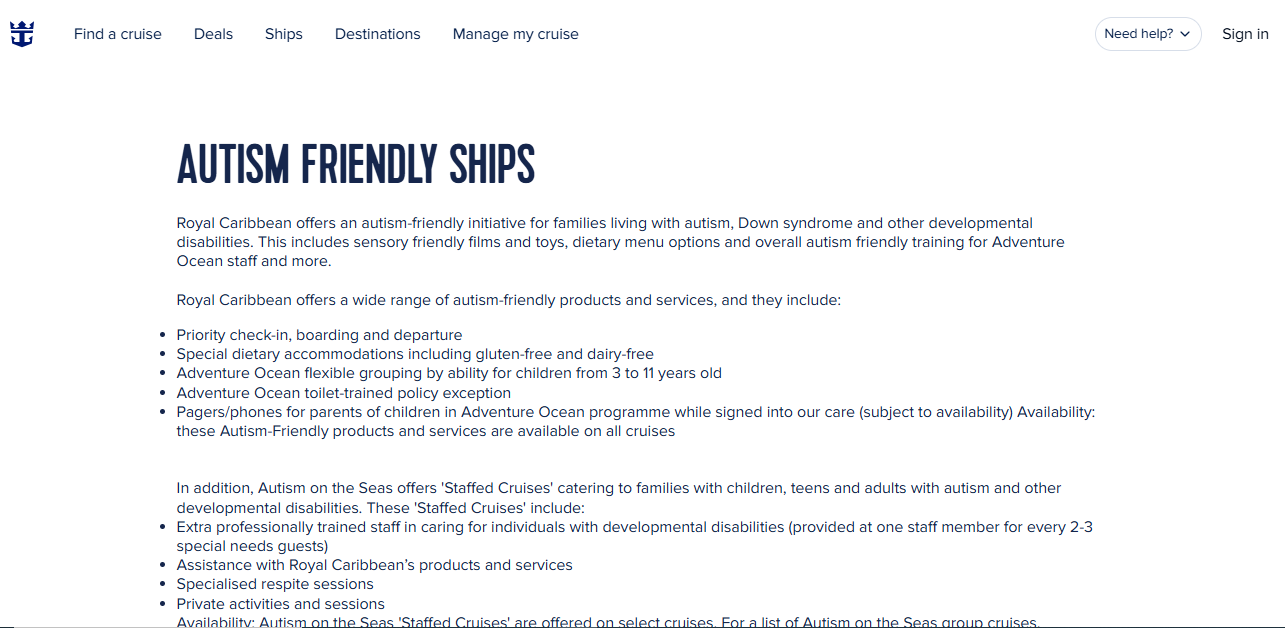
Whilst Royal is not signed up to the Sunflowers Hidden Disability program, they have extensive accessibility information on their website about a variety of disabilities, including an entire section for Autistic travellers which can be found here. Royal is also a partner of Autism on the Seas who provide select specialty cruises throughout the year with trained staff and respite sessions.
Pre-Planning Information - Score 2 out of 2
As with a lot of Autistic people I feel most confident and comfortable to try new experiences when I have extensive information about that new thing.
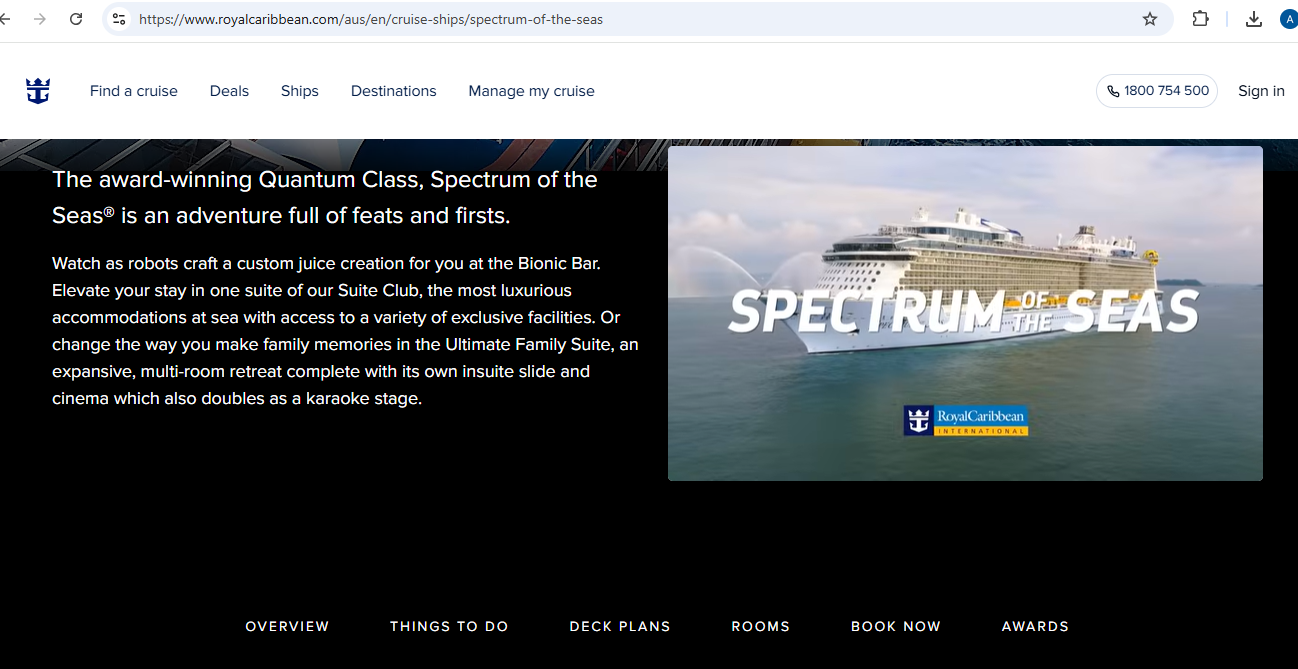
Royal’s website provides just that. There is a page for each ship in the fleet that has a quick video about what is on each ship and information about Dining, Activities , Rooms and Deck Plans. It has pictures of all of the room classes and leisure activities. Under the accessibility tab there is even a visual schedule template that you can download and customise.
As you get closer to your cruise, if you download the Royal app, you can book in times for different shows, have a look at the menu for the dining room for each night of your cruise and also see what activities are scheduled that you might like to participate in.
The only suggestions for improvement under this section would be to include virtual room walkthrough tours like the ones that current exist on Royal’s sister line, Celebrity Cruises.
Wayfinding - Score 1 out of 1
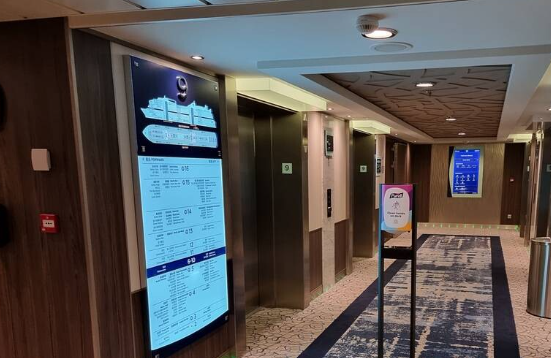
Clear wayfinding in an environment can help Autistic people and their parents/carers reduce anxiety, and promote independence in a new environment by providing predictability and structure. Spectrum of the Seas is quite a large ship and the floors with cabins can be a bit of a rabbit’s warren. That said, whenever you step out of an elevator there is clear signage saying what floor you are on, what side and end of the boat you are on and directionals pointing to what staterooms are in what direction. In each bank of elevators there is a large sign showing what floor you need to go to for what amenity. We got lost a few times, but was always able to get back on track because there is also good signage at regular intervals along the hallway.
Waiting - Score 0 out of 1
Waiting is something that can be really tricky for Autistic people, and this is area where this fell apart even before we got on the cruise.
I was reluctant to include this as the issues encountered were caused by the Port and Immigration process as opposed to the cruise line, however you cannot get on the cruise without going through this. Typically boarding a cruise you would check your luggage with the curb-side porters, move inside and find the lines labelled with pre-selected embarkation times, you would get in the one that matched the time you booked, take your e-ticket to be scanned by cruise line staff, then move on to immigration before boarding the ship. It is typically a 5-15min process. For reference, when we boarded Icon (the largest cruise ship in the world) in Miami, it was 10 mins max from stepping out of an Uber and on to the ship.
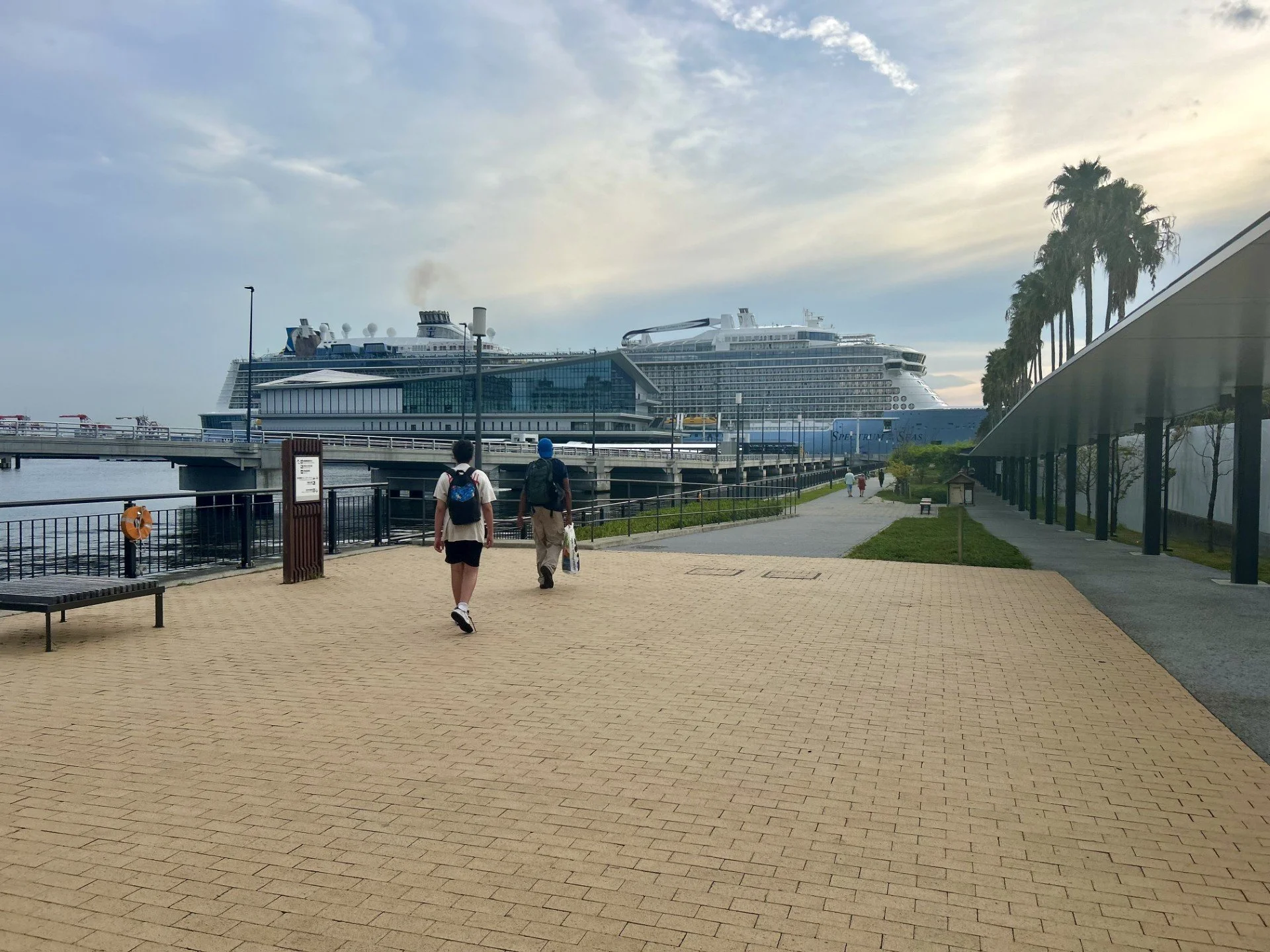
It was a very different experience on this cruise. We had arrived at Baoshan Port at approximately 1pm thinking that it would be 15mins and then we would be enjoying lunch in the Windjammer…this is not what happened. There was no process or directional signage in Mandarin or English. Someone put a sticker on our passports as we entered the port but did not attempt to explain why. We then saw a queue and joined the end of it. When we got halfway up the queue, they checked our passport sticker and it was the wrong number and explained we had to wait for that number to be called.
We then found a corner of this very busy hall to wait until our number was called. At the same time they were calling for all Russians to enter a separate queue, but no explanation as to why. In the end we think we figured out that it was because they have a different visa arrangement with Japan and their Immigration process looked way worse.
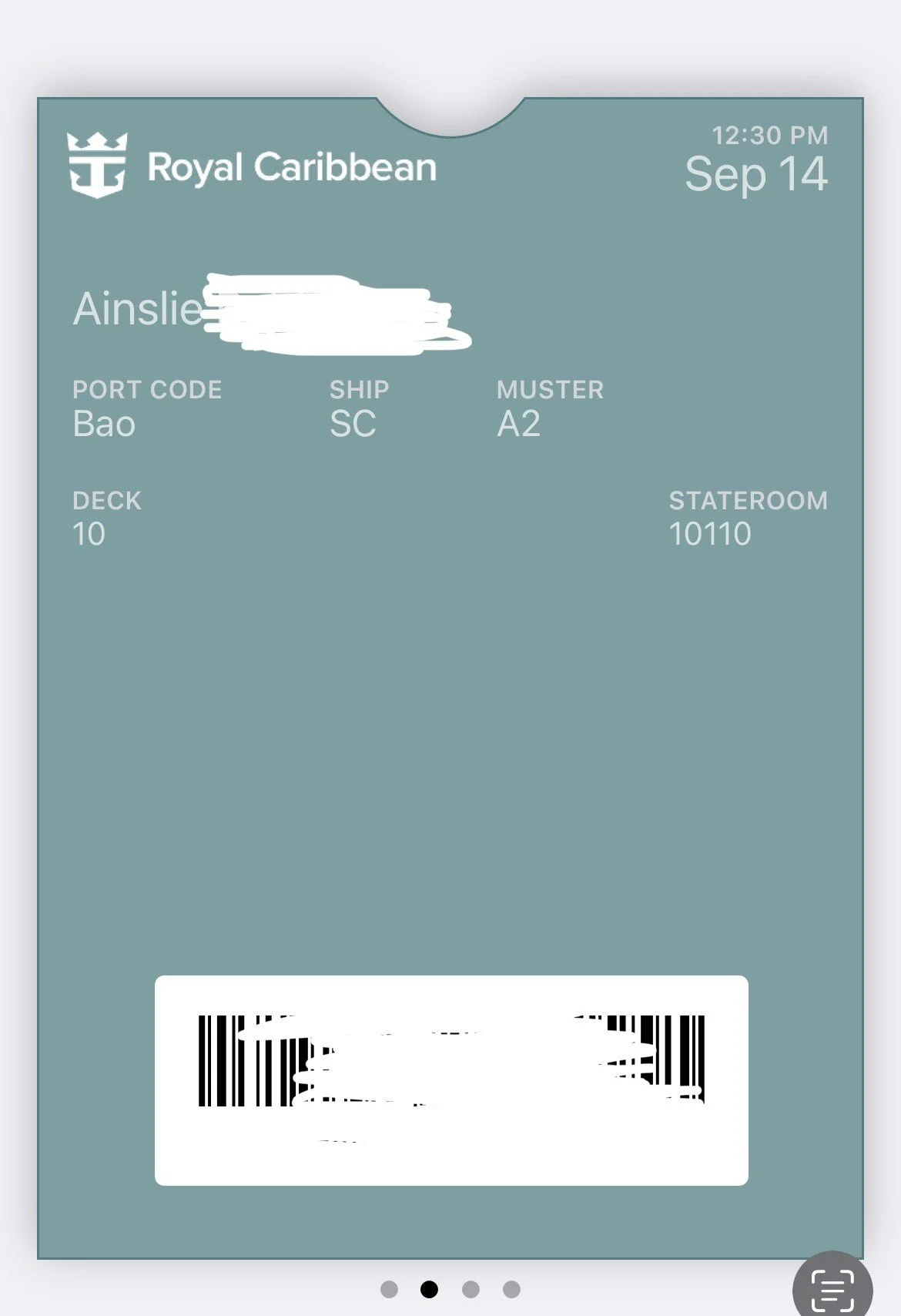
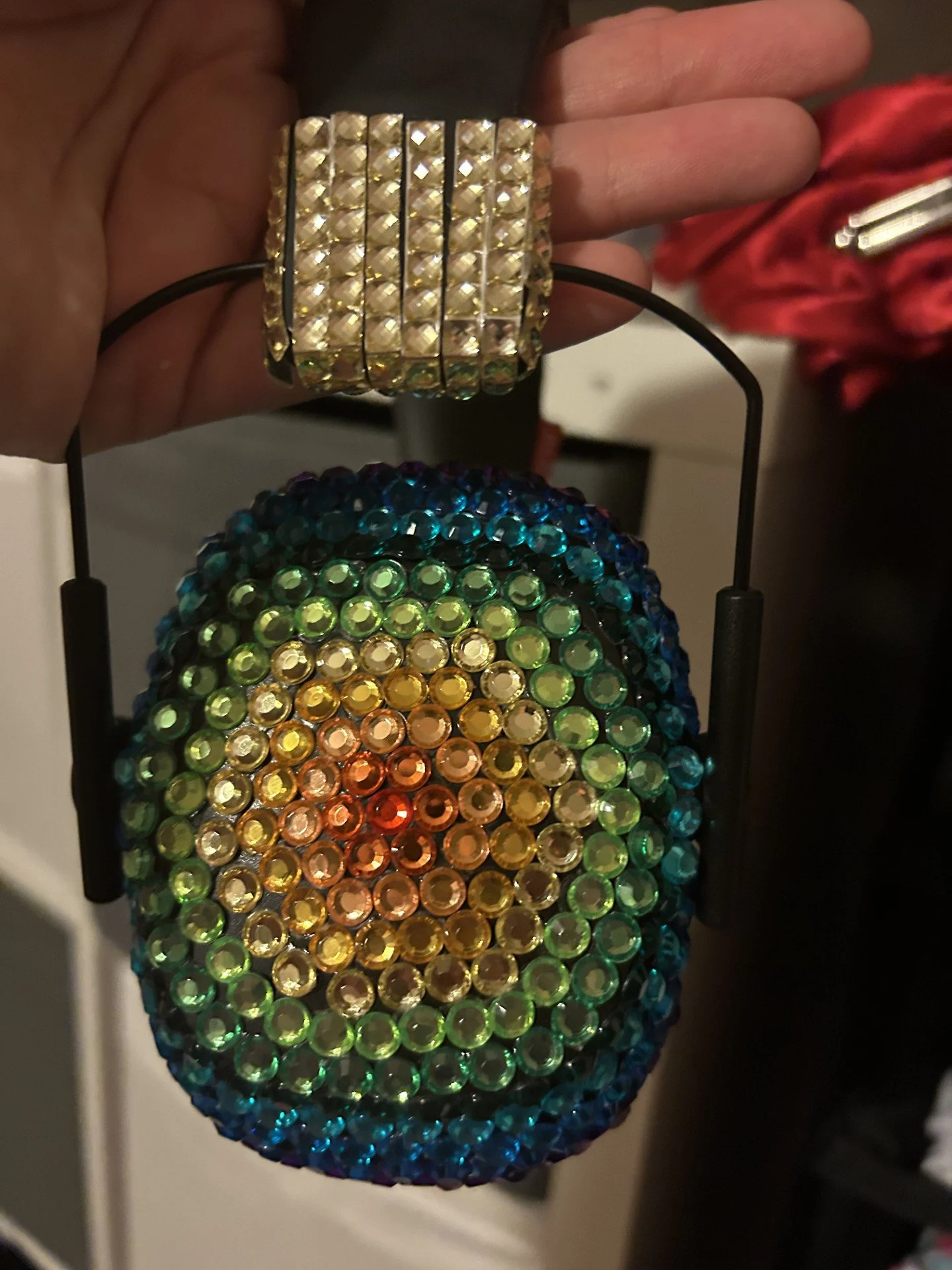
After about 20 mins we re-entered the queue which went on forever. We then got to the Royal Caribbean staff who scanned our tickets (as pictured), which was really fast and we thought we would be having lunch soon (because by now it’s 2pm and we are hungry…well hangry)…spoiler, we did not. We then had to wait for 2 sets of security scans (we think one was for Royal, the other the Port), one really long immigration queue and process, and there was even a five minute holding pause at the bottom of a random escalator. It was hot, crowded, noisy and just truly bizarre. The whole time my kids have earmuffs on, we were distracting them with devices, the bright lights were driving me nuts and we were taking turns trying to keep each other calm when the other is just done. By the time we got on the ship it was about 3pm and the Windjammer was closing but we just managed to sneak in a plate whilst it shut around us, with hundreds upon hundreds of people arriving after us. After that we went to our room and tried to get some bars of energy back because we were all DONE.
It was a very similar process upon departure - well maybe that one was 90mins instead of 2 hours. But either way the whole time I was thinking about how awful this would have been for families like mine if this was one of their first forays into travel and maybe their children were very sensory, or could not manage the crowd. It might be enough to stop them trying again.
The waiting that was controlled by Royal itself though was great. We had allocated dining for instance, so we never waited and could just go through to our same seat every night. There was also another instance in which Royal was in charge of the waiting process when we were waiting to disembark in Kobe. Because we were not re-joining the ship until Tokyo our process was a little different to everyone else. The difference was Royal: explained the process; gave us an estimated wait time and a comfy place to sit and wait; and lastly kept us updated about what was happening.
Knowing what to do - Score 0.5 out of 1
In this section of the review we examine how clear processes are, and how well they are communicated. This may be through signage, staff, instruction or labelling of spaces.
This is another area where I struggle to rate this because as mentioned, the processes in the Port embarking and disembarking were by far the worst I have ever experienced on a cruise, and not communicated in signage or even verbally from what I observed.
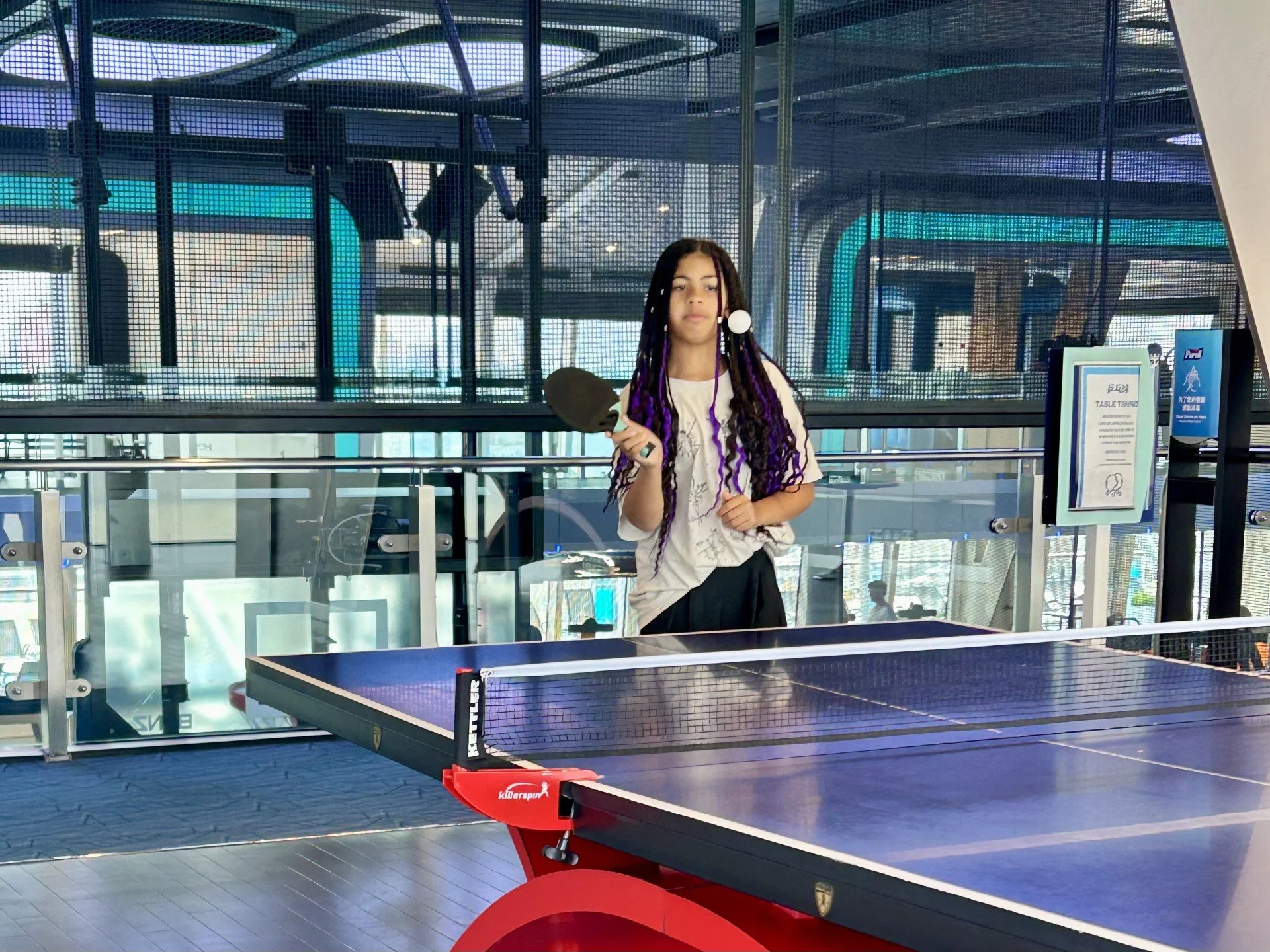
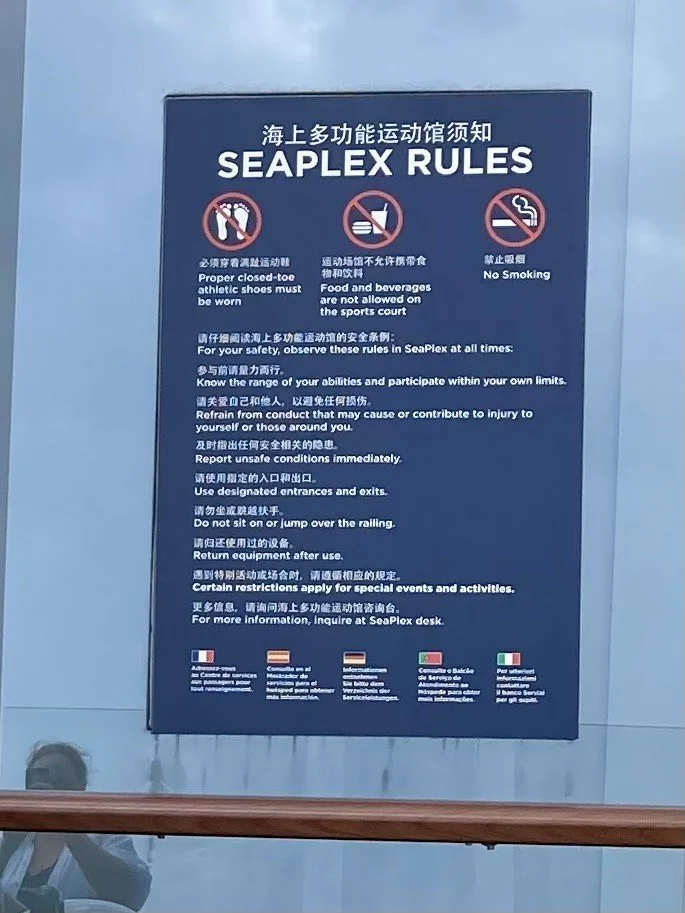
However, I have given half a point here because there were a lot of places during the actual cruise were processes were clear and well communicated e.g. things like not just having signs to say to wash your hands before entering the buffet, but also people at the entrance (the Washy Washys) guiding people (in a fun way) to wash their hands. Recreational rules are clearly explained and displayed in areas such as the pools and Flowrider (as per picture).
In addition, each day there was a visit to a port, or disembarkation, there were always written instructions in English left in our room, on the bed the day before. So whilst the port let the cruise down in terms of processes, Royal certainly didn’t.
Sensory - Score 0 out of 1
Rather than looking at the sensory environment, which often has limitations in how much can be changed, this section will investigate what considerations exist to make the environment easier to exist in. Spectrum is quite a large cruise ship, and as such boarding and disembarking is very noisy and busy. The website did say they have priority boarding for Autistic passengers, however when we enquired before the cruise, they said to just come later in the day and its typically quieter (there was not a specific process). It was not the case, it did not change all afternoon and we departed late because the Port hadn’t been able to process everyone in a timely manner.
Several of us have a really strong sense of smell and an aversion to cigarette smoke. Unfortunately one of the smoking areas on this ship is on one side of the main pool deck and it means one of the hot tubs is unusable because of the smell. It would be far better if this was up one level, away from children and leisure areas.
One area that Royal does really well in regard to sensory are the warning messages before sounding any alarms. They also start off softer and increase in volume which gives passengers time to cover their ears and isn’t startling.
A feature that would be really helpful for Autistic travellers would be access to loan weighted blankets, so we don’t have to use the bulk of our luggage allowance on a weighted blanket. Lastly, having a collection of sensory tools that can be borrowed would also be a welcome addition.
Staff - Score 1 out of 1
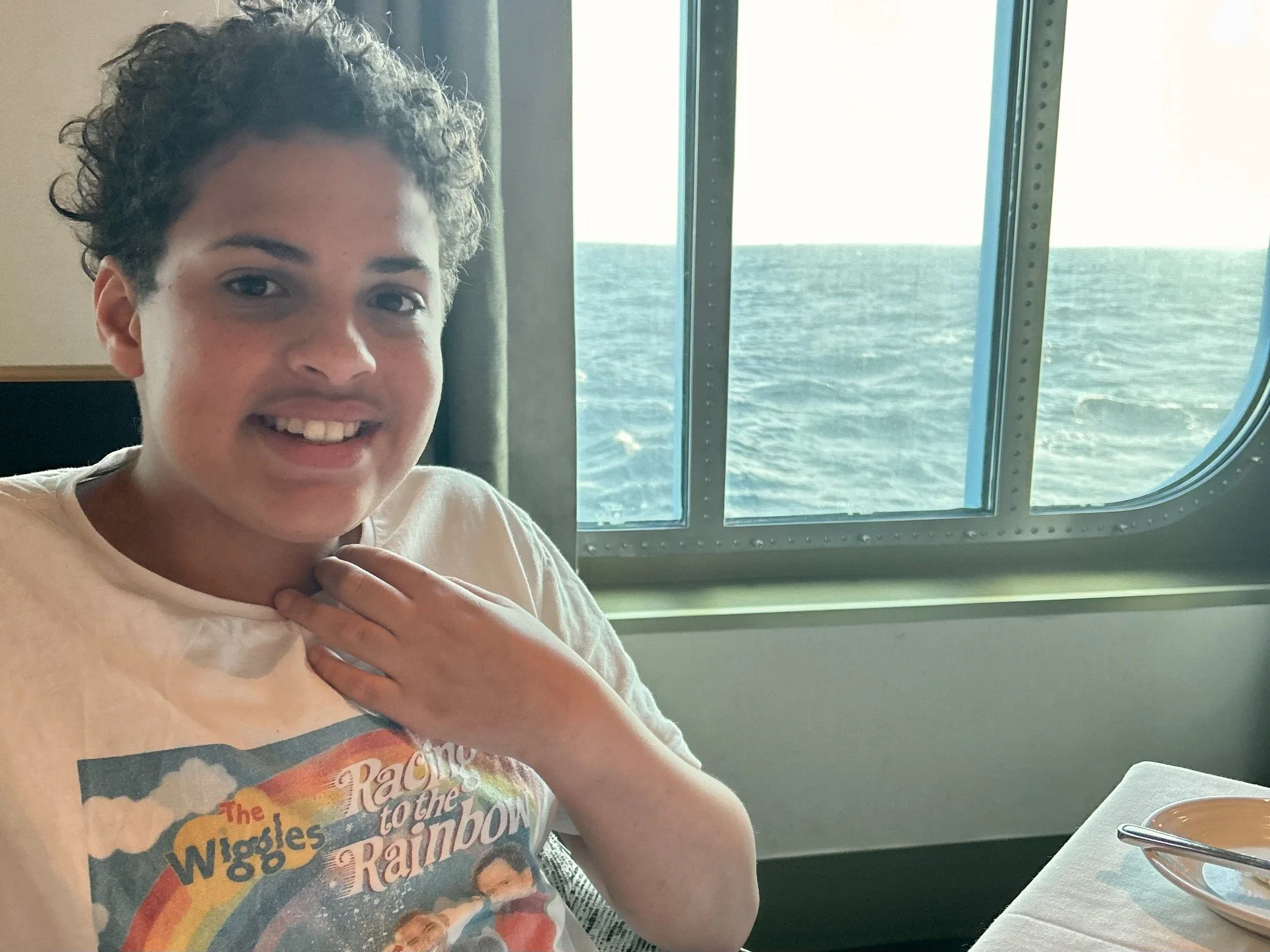
In this section of the review we look at how the staff interact with the members of our travel-party, particularly my son, Bear who has higher support needs and is more ‘obviously autistic’. Over the cruise, our son interacted with staff in the dining room, recreation staff, guest relations staff and they were all pleasant enough. There was however a particularly lovely crew member in the buffet who stopped and had a chat with him. Bear can speak but it requires a patient conversation partner, and this particular crew member was willing to give him the processing time he needed.
Would I visit again?
Now…. this is a complicated answer, and it’s a yes and no.
One of the only areas this cruise did not score well was waiting. But how poorly this cruise performed in this one area was enough to make it a ‘no, never again from this particular port’. However, this was strictly due to port and immigration employees and processes, not Royal Caribbean itself. However it is impossible to detach the port experience from the ship experience, as you need to go through the port experience to enjoy the ship.
That said waiting is such a key part of being autism-friendly, if it takes two hours to get on and off a ship, I just would never recommend it to a family like ours. In our case, now that we have older children who have over time learned to tolerate queues, it was just really annoying. But I am thinking about a lot of families I know and our experience boarding the ship with the combination of waiting, noise and crowds would have triggered rolling apocalyptic meltdowns.
In regard to how Royal performed on this cruise, it was very autism-friendly and I would live every day of my life on a Royal Caribbean cruise if I could. Just not if it’s departing from Shanghai! I will never, ever do that again.
Suggestions For Self-Support
If you are sound sensitive, make sure to pack a pair of ear-defenders, headphones or Loops as this is a large, busy and noisy ship and the port was extremely overwhelming.
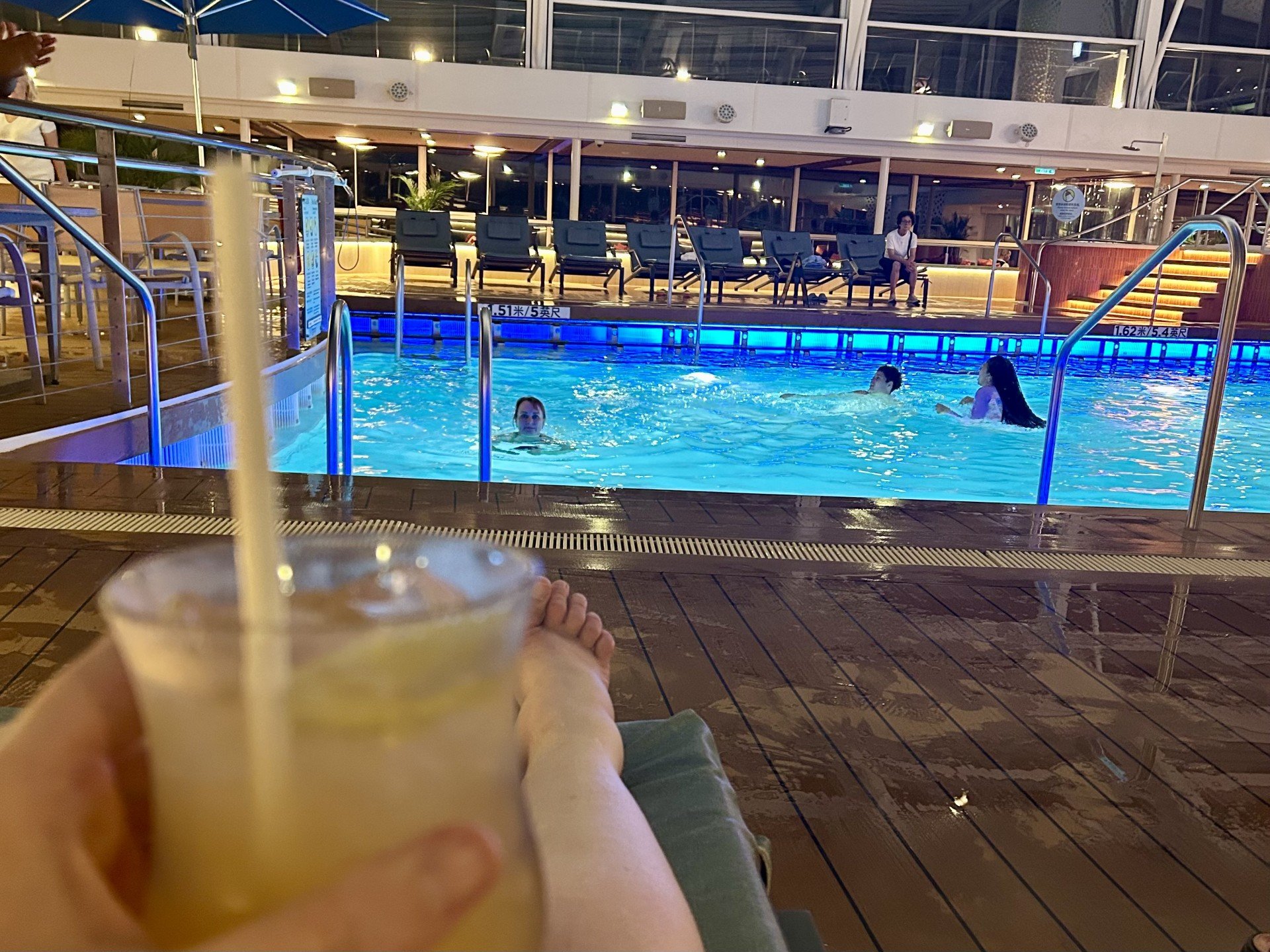
We have found that both pools can get quite busy in the middle of the day. Either pool first thing in the morning can be a good option, and Bear says that night swimming in the indoor pool is ‘chef’s kiss’.
If you have an Autistic child who has a developmental delay that means it would be beneficial for them to be in a younger Kids’ Club, Royal offers this flexibility. Just go and speak with the staff about what their individual needs are when you register them.
If you need a weighted blanket to sleep, make sure to bring these with you.
We also take a really light blackout curtain and some magnets (the ceiling of cruise cabins are magnetic) with us. We hang it at night because cruise dad wakes up earlier than us and can come and go without letting light from the hall stream in.
Bonus info: this one isn’t an autism support tip, but if you are using the sofa bed on this ship, it is FIRM. We always take a mattress topper (as seen in this pic) or you can ask your cabin attendant for some extra doonas. We seriously have a bag just for the weighted blanket, mattress topper and blackout curtains - luckily we pack light for other things. I just don’t mess around with my sleep quality.
Accessibility for people with hidden disabilities, including autism, is still relatively new for many organisations, and in many cases these needs simply haven’t been fully considered yet. That doesn’t always reflect a lack of care, but rather a lack of awareness, experience, or guidance. By asking questions, sharing feedback, and advocating for clearer information and more inclusive practices, travellers can play an important role in shaping change. Every conversation, request, and piece of feedback helps signal that accessibility matters, and that autistic people and families belong in these spaces too. So if there is somewhere close that you would love to visit but you don’t feel they are quite there yet, take a minute to gently advocate for change. The more families like ours that ask for and expect inclusion, the more likely it will happen.
There are organisations globally you can assist organisations in improve their ‘autism friendliness’ in Australia, the USA and the UK. If you want to point these organisations in the direction of support in doing this work, these include:
Australia / New Zealand: Aspect’s Autism Friendly
USA: IBCCES Certified Autism Center™ (CAC) program and Autism Friendly Club
UK: National Autistic Society